Inquiry
Form loading...

7 Butter Valve Buying Tips for Global Buyers

A Butter Valve can look simple on a catalog page. The wrong choice, however, may cause leakage, excessive torque, or premature wear. For global buyers, a dependable purchase starts with the actual service conditions, not the lowest quoted price. Check the medium, operating temperature, pressure range, and required flow capacity. Small details matter.

Inspect the valve body, disc, seat, stem, and connection dimensions against the project specifications. Ask whether the materials suit the fluid and expected operating cycles. Confirm the pressure and temperature ratings from current technical documents. Request clear drawings, test reports, and traceable product identification. A polished brochure is not enough. Compare suppliers on documented quality controls, production experience, and after-sales support. Also verify that the chosen design fits the pipeline, actuator, and installation space.

This guide explores seven practical buying checks, from material selection and performance data to supplier evaluation and delivery planning. It encourages buyers to ask specific questions and keep written records of answers. One point deserves care: a named expert quotation needs a verifiable source. None was provided, so this introduction does not invent an expert’s name or words. That restraint may feel less promotional. It is more reliable. Use the checklist to compare options, identify missing evidence, and discuss uncertainties with qualified valve professionals before placing an order.
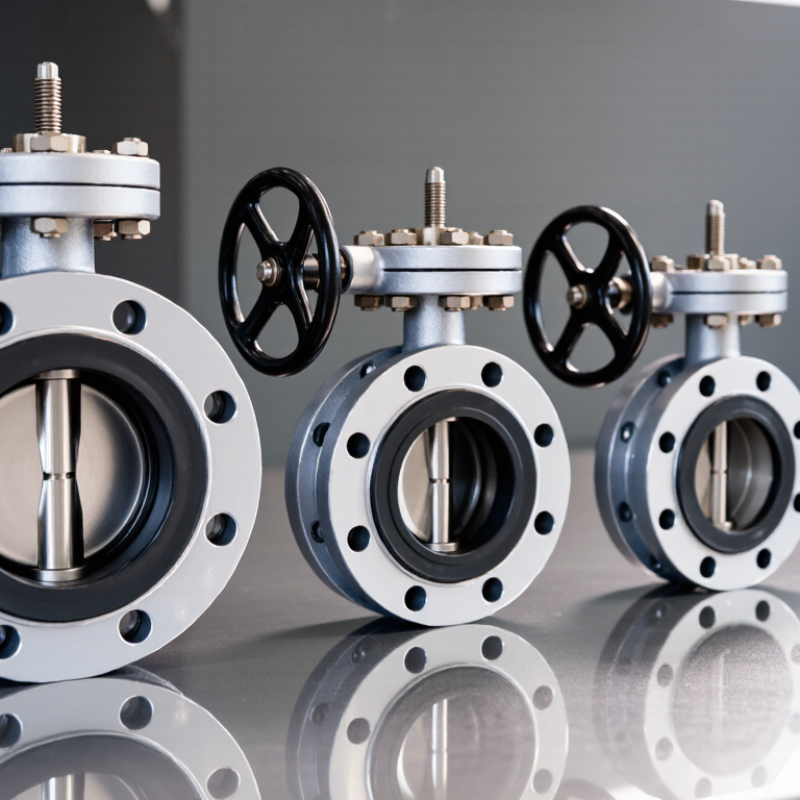
7 Butter Valve Buying Tips for Global Buyers

Understand Butterfly Valve Types and Their Applications

Butterfly valves use a rotating disc to control flow, but their designs suit different operating conditions. A resilient-seated concentric valve is common in water distribution, HVAC systems, and general service. Its elastomer seat provides tight shutoff at moderate pressures and temperatures. It is compact and often economical. The seat material must still match the fluid and temperature.

High-performance double-offset valves reduce disc-to-seat contact during operation. They can suit process lines with higher pressures or temperatures than many concentric designs allow. Triple-offset metal-seated valves are often selected for demanding thermal cycles and tight shutoff requirements. They need careful specification. Metal seats may tolerate heat, but they do not automatically suit every abrasive or corrosive medium.

Connection style also matters. Wafer valves fit between pipeline flanges, while lug-style bodies can support end-of-line service when the design permits. Flanged bodies may help where alignment or maintenance access is important. Check the actual pressure-temperature rating, disc and seat materials, shaft sealing, and actuator requirements. A valve used with clean cooling water may behave differently in a line carrying suspended solids. This is easy to overlook. Before comparing quotations, share the medium, temperature range, pressure, pipe size, and expected operating frequency. A catalog description alone may not reveal a poor match.
Match Valve Materials to the Fluid and Operating Environment

For a butterfly valve, material selection should begin with the fluid, not the purchase price. The valve body, disc, stem, and seat may face different stresses. Water, seawater, oils, and chemical solutions each require careful compatibility checks. A corrosion-resistant body does not guarantee that the seat will tolerate the same fluid. Details matter.

Temperature and pressure can change material performance. Heat may soften an elastomer seat, while cold can make some materials less flexible. Abrasive slurries can wear disc edges and sealing surfaces, even when corrosion is not a concern. Check the fluid concentration, operating temperature range, pressure, and cleaning process against supplier data. Ask for written compatibility information when conditions vary. A small sample test may help, but it cannot replace engineering review for critical service. It is easy to focus on the body material and overlook the seat. That choice can be costly. No material is perfect, and published charts may not cover every mixture or operating cycle. Record the actual service conditions before comparing options.

7 Butter Valve Buying Tips for Global Buyers - Match Valve Materials to the Fluid and Operating Environment

Tip Fluid or Operating Environment Body and Disc Material Considerations Seat Material Considerations Key Checks Before Buying
1. Match the valve to the actual fluid Clean water, treated water, or general utility service Ductile iron bodies are common for general water service; stainless-steel discs may be specified where greater corrosion resistance is needed. EPDM is commonly used for water service, but suitability depends on temperature, treatment chemicals, and the exact EPDM compound. Confirm water chemistry, disinfectant levels, operating temperature, pressure, and any required potable-water approvals.
2. Check compatibility with oils and fuels Lubricating oils, hydraulic fluids, or fuel service Carbon steel, ductile iron, and stainless steel may be options depending on the fluid and corrosion conditions. Select the disc material as well as the body material for the service. NBR is used in some oil services; FKM may suit many oils and fuels. Neither is universally compatible with every blend, additive, or temperature. Provide the exact fluid composition and temperature. Check compatibility with additives, aromatic content, and any cleaning chemicals.
3. Account for chlorides and seawater Seawater, brackish water, or chloride-bearing process fluids Duplex stainless steel or nickel-aluminum bronze may be considered for wetted components, depending on the service. 316 stainless steel can be susceptible to pitting and crevice corrosion in seawater. EPDM is often considered for water-based service, but the specific compound and valve design must be verified for the operating conditions. Review chloride concentration, temperature, flow velocity, crevices, galvanic couples, and corrosion-control requirements.
4. Verify chemical compatibility by concentration Acids, alkalis, solvents, or mixed process chemicals Do not assume stainless steel is suitable for every chemical. Body and disc materials must be checked against the exact chemical and its concentration. PTFE offers broad chemical resistance, but suitability still depends on the chemical, temperature, pressure, and seat design. Other polymers have narrower compatibility ranges. Check a chemical-resistance guide for the specific concentration and temperature, then confirm with the valve supplier before ordering.
5. Check temperature and pressure together Hot water, elevated-temperature processes, or steam Metal components may tolerate higher temperatures than elastomer seats, but the complete valve assembly has a defined pressure-temperature limit. Standard elastomer seats may be unsuitable for high-temperature service or steam. Use only a seat and valve design explicitly rated for the application. Confirm the valve’s pressure-temperature rating, temperature cycling, steam conditions, and whether a resilient-seated or metal-seated design is required.
6. Consider solids and abrasion Slurries, suspended solids, or abrasive process fluids Disc and body wear resistance matter. A hard-faced or otherwise abrasion-resistant trim may be appropriate for some services, but it must be selected for the actual particles and flow conditions. Seat damage or particle buildup can affect shutoff and operation. An elastomer-lined design may suit some slurries, but is not suitable for every particle size or temperature. Specify solids content, particle size and hardness, flow velocity, required shutoff, and cleaning method.
7. Include the surrounding environment Outdoor, coastal, humid, or cold-weather installation Consider external corrosion as well as internal fluid corrosion. A suitable coating can protect a body, while stainless or other corrosion-resistant components may be needed in exposed locations. Elastomer flexibility changes with temperature. Select a seat compound rated for the minimum and maximum operating temperatures. Check ambient temperature, UV and salt exposure, insulation, freeze risk, actuator enclosure rating, and the full valve assembly’s temperature limits.

Selection note: Material compatibility depends on the exact fluid composition, concentration, temperature, pressure, and valve construction. Confirm the complete wetted-material list and service ratings with the valve supplier before purchase.

Verify Pressure, Temperature, Size, and Connection Requirements

Before requesting quotes, record the maximum operating pressure, temperature range, and fluid type. Include short pressure surges during pump start-up, not only normal line pressure. A valve rated for 16 bar at room temperature may have a lower allowable pressure at higher temperatures. Check the manufacturer’s pressure-temperature chart and confirm the required shut-off differential. Clean water and abrasive slurry can call for different disc and seat materials. Small details matter. Measure twice.

Match the valve’s nominal size to the pipe, but verify the actual inside diameter and required flow. An oversized or undersized valve can affect control and performance. Then confirm the connection style: wafer, lug, or flanged ends are not interchangeable without checking the piping layout. Compare flange standards, bolt patterns, face-to-face dimensions, and available clearance for the handle or actuator. A drawing may look right while a bolt pattern does not. I have seen buyers focus on size and miss the connection detail, which can delay installation. Ask the supplier to confirm all four requirements in writing against your operating conditions.

Evaluate Actuators, Seals, Standards, and Certifications

When comparing butterfly valves, size the actuator for the valve’s actual operating conditions, not just its nominal diameter. Ask for torque data at the expected pressure difference and temperature. Check whether pneumatic, electric, or manual operation suits the site, including available power and control signals. For automated lines, confirm the required fail position during power or air loss. Small details matter.

Seal material needs to match the fluid, temperature range, and cleaning process. A seal that performs well with water may swell or harden in another medium. Request documented compatibility data, and check whether repeated cycling or abrasive particles affect expected service life. Even a tidy specification sheet can miss a real operating condition; review it against the process, not only the purchase list.

Standards and certificates should match the application and destination requirements. Compare flange dimensions, pressure ratings, and test requirements with the project documents. Check certificates for the exact valve model, materials, and manufacturing scope; a general certificate may not cover every configuration. Ask for traceable test records and material documentation when required. I would not treat a logo on a datasheet as proof by itself. Verify the issuing body and certificate validity before ordering.

Compare Suppliers, Documentation, Delivery, and After-Sales Support

Compare suppliers on more than price. Check manufacturing capability, inspection methods, and experience with your valve type. Request material certificates, pressure-test records, and traceability linking each valve to its heat or serial number. Verify that pressure class, materials, and test standard match the purchase order. The World Bank’s 2023 Logistics Performance Index assessed 139 economies across six areas, including tracking and timeliness. That is a useful reminder: a supplier’s paperwork matters, but so does the ability to track an order. Small details matter.

For delivery, ask for a production schedule, dispatch date, transport mode, and clear responsibility for export documents. Confirm protective packaging too; damp wooden crates or loose flange covers can create trouble on arrival. UNCTAD reported that maritime trade grew 2.4% in 2023, while ton-mile demand rose 4.2% as routes lengthened. Shipping conditions can shift. A quoted lead time is not a shipment date.

After-sales support should be specific. Ask how quickly technical questions receive replies, which spare parts are available, and what the warranty excludes. Keep inspection records, photos, and correspondence in one order file. A polished certificate pack is not proof by itself; verify a sample against the actual valve markings. Even a careful checklist can miss a mismatch. Sources: World Bank, Logistics Performance Index 2023; UNCTAD, Review of Maritime Transport 2024.

7 Butterfly Valve Buying Tips for Global Buyers

Compare suppliers, documentation, delivery, and after-sales support with a practical buyer checklist.

The bars count suggested checks in this checklist, not market statistics or supplier ratings. Confirm applicable standards, materials, delivery terms, and service coverage for your project.