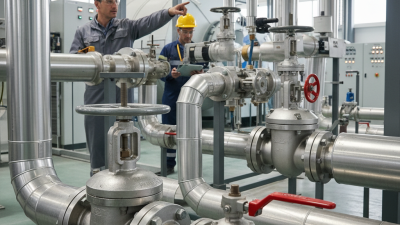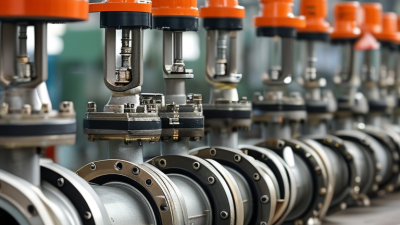
Choosing the right Steam Valve is not a catalog exercise. It is a process decision shaped by pressure, temperature, condensate, maintenance access, and plant risk.
Globe valves often suit throttling duties, where operators need controlled steam flow. Gate valves usually serve isolation points, especially on larger pipelines. Ball valves provide quick shutoff and compact installation. Butterfly valves can reduce weight and cost on low-pressure or large-diameter lines. Check valves help prevent reverse flow, protecting boilers, heaters, and rotating equipment. Each type has a different weakness.
Small details matter.
A valve that works well in a clean utility line may fail early in wet steam service. Seat material, actuator selection, flange rating, corrosion resistance, and spare-part availability deserve equal attention. Global buyers must also compare pressure classes, temperature limits, inspection documents, and regional conformity requirements. The cheapest purchase price can become an expensive maintenance problem.
Dr. James R. Couper, a respected chemical process equipment author, emphasized a practical principle: “Equipment selection must follow the process, not the catalog.” That guidance remains valuable for Steam Valve purchasing today. However, buyers should question simplified comparisons. No single valve type is best for every plant, climate, or operating cycle. A humid coastal facility may need stronger corrosion protection, while a remote factory may prioritize simple repairs and locally available seals. The most reliable choice combines verified engineering data, field experience, and realistic lifecycle planning. Mistakes still happen. Careful review reduces them.
A steam valve controls, isolates, or redirects pressurized water vapor inside piping and process equipment. Its selection affects safety, heat transfer, maintenance, and operating cost. The valve body, trim, seat, actuator, and pressure rating must match steam temperature and pressure.
Global buyers usually compare globe, gate, ball, butterfly, check, and control valves. Globe valves suit frequent throttling because their internal plug offers precise flow adjustment. Gate valves provide strong isolation but perform poorly during continuous throttling. Ball valves shut quickly with low pressure loss, although seats can suffer under contaminated or cycling steam. Butterfly valves save space and weight on larger lines. Check valves prevent reverse flow near boilers, pumps, and condensate return systems.
The U.S. Department of Energy reports that steam-system improvements can commonly deliver 10% to 20% energy savings in industrial facilities. That figure makes leakage control and correct valve sizing commercially important. ASME B16.34 defines pressure-temperature ratings for many industrial valves, while ISO 15848-1 addresses fugitive-emission testing. Buyers should request test records, material certificates, and actuator data, not only a product catalogue.
Field experience also exposes uncomfortable details. A correctly rated valve can still fail when installed backward, oversized, or near severe vibration. A control valve that looks efficient on paper may hunt, erode, or waste steam in real service. Engineers should check start-up conditions, wet steam, condensate pockets, cycling frequency, and maintenance access. Sometimes, a smaller and simpler valve performs better. Not always.

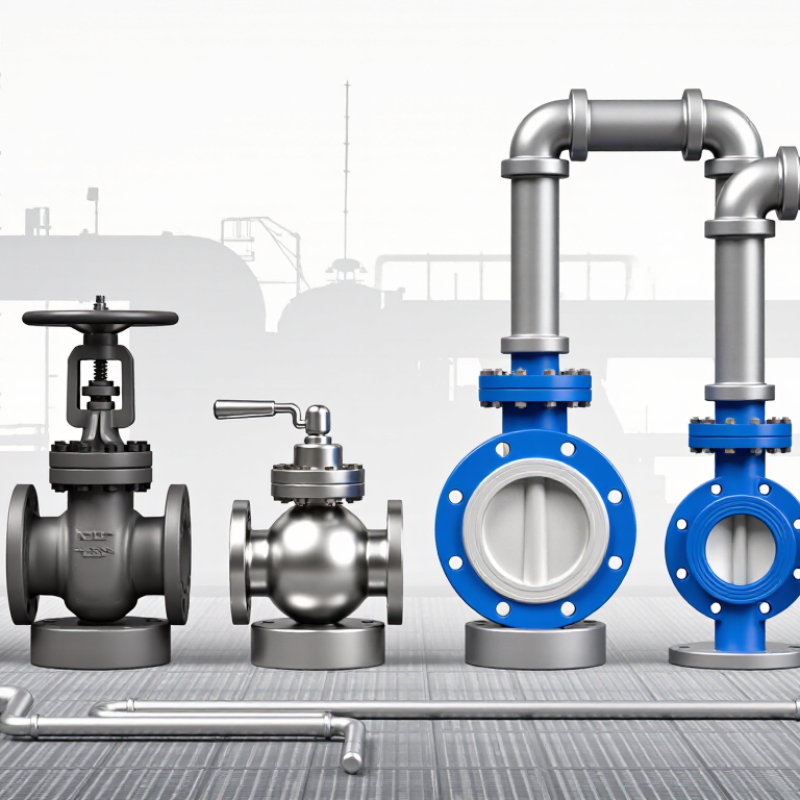
Globe, gate, and ball valves each serve different roles in steam systems. Selecting one by pipe size alone often creates avoidable maintenance problems. Operating pressure, temperature, flow direction, and condensate conditions require equal attention. A valve may fit the line yet fail under repeated thermal cycling.
Globe valves provide accurate throttling and stable flow control. Their internal disc changes flow gradually, which helps regulate heaters and process branches. However, the pressure drop can be significant. Their longer bodies also require more installation space. In field inspections, worn seats often reveal poor control practices, especially when operators use the valve as a shutoff device.
Gate valves perform best as isolation valves. Their fully open passage creates minimal resistance, but they should not regulate steam flow. Partial opening can damage the gate and produce vibration. Ball valves offer fast quarter-turn operation and compact installation. They can isolate steam quickly, but seat materials and cavity pressure need careful evaluation. Thermal expansion may trap pressure inside the valve. That detail is easy to overlook. Drainage, insulation, and correct actuator selection also affect reliability. A practical choice may still need revision after reviewing condensate behavior, maintenance access, and emergency operating requirements.
| Evaluation Dimension | Globe Valve | Gate Valve | Ball Valve |
|---|---|---|---|
| Primary Function | Flow regulation, throttling, and shutoff | Full-open or full-closed isolation | Fast, tight shutoff and isolation |
| Steam-System Suitability | Excellent for control stations, bypass lines, and pressure-reducing applications | Excellent for main steam headers and infrequently operated isolation points | Very Good for compact isolation duties when the design is specifically rated for steam service |
| Throttling Capability | High — designed for controlled flow adjustment | Low — partial opening can cause vibration, wire-drawing, and seat damage | Low — standard on/off ball valves should not be used for continuous throttling |
| Full-Open Pressure Loss | Moderate to high because the flow path changes direction through the body | Low when fully open, with a relatively straight flow path | Low when the port is full-bore and fully open |
| Shutoff Performance | Good to excellent, depending on seat design, trim, and operating conditions | Good to excellent for isolation; wedge alignment and thermal effects must be considered | Excellent with suitable metal-seated or high-temperature soft-seated construction |
| Typical Operating Speed | Slow to moderate; commonly handwheel-operated with multiple turns | Slow; generally requires multiple turns to travel from open to closed | Fast; quarter-turn operation is standard |
| Steam Pressure-Drop Control | Strong due to precise plug-and-seat control | Weak because it is intended to operate fully open or fully closed | Limited for standard on/off designs; characterized control versions are specialized |
| Resistance to Thermal Cycling | Generally good; correct body, trim, packing, and bonnet selection is essential | Good when properly installed, but wedge valves may experience thermal binding or seat-loading issues | Good when the valve includes an appropriate cavity-relief design and high-temperature seats |
| Water-Hammer and Pressure-Surge Risk | Lower risk when operated gradually, although incorrect throttling can create noise and vibration | Usually low during normal slow operation; rapid actuator operation can still create surges | Higher potential risk because quarter-turn closure can stop steam or condensate flow rapidly |
| Maintenance Considerations | More internal wear is possible during throttling; packing and seat condition require routine inspection | Robust design, but wedge, stem, and seating surfaces may require attention after long periods without operation | Compact and low-maintenance, but seat, stem-seal, and cavity-pressure behavior must be checked |
| Installation Orientation | Follow the body flow arrow where provided; orientation and actuator access should support safe operation | Usually installed with the stem vertical or near vertical where practical, especially for larger steam valves | Can often be installed in multiple orientations, subject to the manufacturer’s stem, actuator, and drainage requirements |
| Best Application Examples | Steam control valves, heater branches, desuperheater lines, bypass systems, and pressure-control stations | Main steam isolation, boiler outlet isolation, turbine isolation, and equipment maintenance boundaries | Low-maintenance branch isolation, packaged steam equipment, utility steam lines, and automated emergency isolation |
| Common Design Options | Y-pattern, angle, straight-pattern, balanced plug, extended bonnet, and welded-end designs | Parallel-slide, flexible-wedge, solid-wedge, rising-stem, and non-rising-stem designs | Floating-ball, trunnion-mounted, reduced-bore, full-bore, metal-seated, and cavity-relieved designs |
| Relative Capital Cost | Medium to high, especially for control-grade trim and actuators | Medium to high for large sizes and pressure classes | Low to medium for standard sizes; high-temperature and metal-seated versions cost more |
| Global Buyer Selection Priority | Choose when accurate flow control and stable steam regulation are required | Choose when low full-open pressure loss and dependable long-term isolation are priorities | Choose when rapid operation, compact dimensions, and tight shutoff are more important than throttling |
| Important Specification Checks | Pressure class, temperature rating, trim material, leakage class, actuator sizing, and flow coefficient | Pressure class, thermal-binding risk, wedge type, stem design, bonnet construction, and end connection | Pressure-temperature rating, seat material, fire-safe design, cavity relief, fugitive emissions, and actuator compatibility |
| Selection note: Actual performance depends on pressure, temperature, steam quality, valve size, materials, seat design, actuator configuration, installation, and applicable standards. Verify the final specification against the project piping class and the valve manufacturer’s certified pressure-temperature ratings. | |||
What Are the Top Steam Valve Types for Global Buyers?
When Butterfly, Check, and Control Valves Are the Best Choice
Butterfly valves suit steam isolation when space, weight, and operating speed matter. Their compact discs turn quickly, like a metal door in a narrow pipe rack. However, high-temperature steam can damage seats if materials and pressure ratings are poorly matched. Check valves prevent reverse flow after pumps, boilers, or heat exchangers. Swing, lift, and tilting-disc designs behave differently under rapid pressure changes. A wrong selection may create water hammer, noise, or premature wear. The U.S. Department of Energy’s Improving Steam System Performance sourcebook reports that practical steam-system improvements can often deliver energy savings above 10%. Valve leakage and poor isolation deserve attention.
Control valves are better for regulating pressure, temperature, and flow than for simple shutoff. Globe and angle patterns offer stable throttling, while specialized designs handle flashing or high pressure drops. Buyers should compare Cv, allowable leakage, actuator response, steam quality, and maintenance access. ISO 15848 addresses fugitive-emission testing, while relevant API and ASME standards support pressure and valve design decisions. The 2023 IEA Energy Efficiency report also identifies industrial energy management as a major efficiency opportunity, making control accuracy increasingly important.
Tips: Confirm pressure, temperature, pipe size, flow direction, and fail position. Request test certificates and material traceability. Do not select by price alone. Field data sometimes proves the “best” valve was only the easiest to quote.
What Are the Top Steam Valve Types for Global Buyers?
Steam service demands more than a familiar valve shape. Gate valves suit isolation, while globe valves provide better throttling control. Check valves prevent reverse flow after pumps or pressure drops. Ball valves can isolate compact systems, but their seats need careful temperature review. Material choice remains critical. Carbon steel handles many industrial steam lines economically. Stainless steel resists corrosion and contamination. Alloy steel is stronger for high-temperature, high-pressure steam. Bronze may suit smaller, lower-pressure services, but it is not a universal answer.
Tips: Match the valve body, trim, gasket, and seat to the actual steam temperature. A Class 300 rating does not mean 300 psi at every temperature. Pressure ratings require temperature derating. PN and Class systems also differ, so avoid direct conversion without engineering confirmation. Check saturated or superheated steam conditions. Local codes and inspection rules must be reviewed before purchase.
Experienced engineers also examine water hammer, cycling frequency, and maintenance access. A gate valve may fail early when used for constant throttling. A globe valve may create unwanted pressure loss in a long production line. Stainless steel sounds safer, yet chloride exposure can still cause problems. I have seen specifications focus on pressure while ignoring corrosion and condensate. That is an incomplete review. Reliable selection combines pressure, temperature, chemistry, connection standards, and verified test documentation. There is no perfect valve material. The correct choice depends on the complete operating picture.
Reference pressure ratings commonly used in global steam applications. Gate and globe valves are widely used for isolation and throttling, while check valves prevent reverse flow and safety valves protect against overpressure. Material selection should consider temperature, corrosion, and the applicable design standard.
PN values are nominal pressure ratings in bar. ASME Class 150 and Class 300 values are approximate pressure equivalents at ambient temperature; actual allowable pressure decreases as temperature rises and depends on the valve material and applicable standard.
Global buyers usually compare globe, ball, gate, butterfly, and check valves for steam service. Globe valves offer precise throttling, while ball valves provide fast isolation and low operating torque. Gate valves suit fully open or closed lines, but repeated throttling can damage their seats. Butterfly valves reduce weight and purchase cost on larger pipes. Check valves protect equipment from reverse flow.
Standards often decide more than the catalog price. ASME B16.34 supports pressure-temperature design, while API 598 covers pressure testing. ISO 15848-1 addresses fugitive emissions, which matters near hot packing areas. The U.S. Department of Energy’s steam-system guidance reports that surveys commonly find 15–30% of steam traps leaking or failed. That figure exposes a maintenance problem, not merely a valve problem. Buyers should request test records, material certificates, and a clear replacement schedule. A cheaper valve may become expensive after two shutdowns.
Tips: Match the valve to pressure, temperature, flow direction, and cycling frequency. Specify a seat material compatible with condensate chemistry. Keep spare packing and gaskets nearby. Field experience also matters. A clean installation helps, but it cannot correct poor sizing. Some specifications remain unnecessarily complex; buyers should challenge them with operating data. Check valve orientation, insulation clearance, and access for handwheel or actuator servicing before approval.