Inquiry
Form loading...
Choosing reliable Gaskets And Seals manufacturers can influence equipment safety, maintenance costs, and production continuity. Global buyers often compare suppliers across material quality, engineering capability, certifications, and delivery performance. A gasket that looks identical to another may perform very differently under heat, pressure, chemicals, or repeated vibration.
This guide examines manufacturers serving international markets, using practical buying criteria rather than catalogue claims alone. It considers rubber, graphite, PTFE, metal, and composite sealing products for energy, automotive, chemical processing, food, and industrial equipment applications. Factory experience matters. So do traceable materials, documented testing, dimensional control, and responsive technical support. Buyers should review ISO certifications, inspection records, sample results, and production capacity before placing large orders. Small details matter, such as flange alignment, surface finish, storage conditions, and packaging that prevents deformation during long-distance shipping.
No supplier is perfect. Even an experienced manufacturer may face delays, material shortages, or inconsistent communication across regions. That reality deserves attention. Strong companies explain limitations clearly and provide corrective actions when specifications change. The most dependable partnerships usually develop through verified samples, transparent quotations, controlled drawings, and realistic lead times. This overview aims to help global buyers identify capable manufacturers, ask sharper questions, and reduce avoidable sealing failures. Performance should be proven, not assumed.
Gaskets and Seals: Essential Protection for Global Buyers
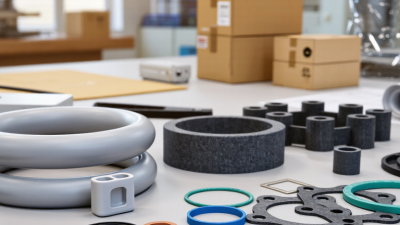
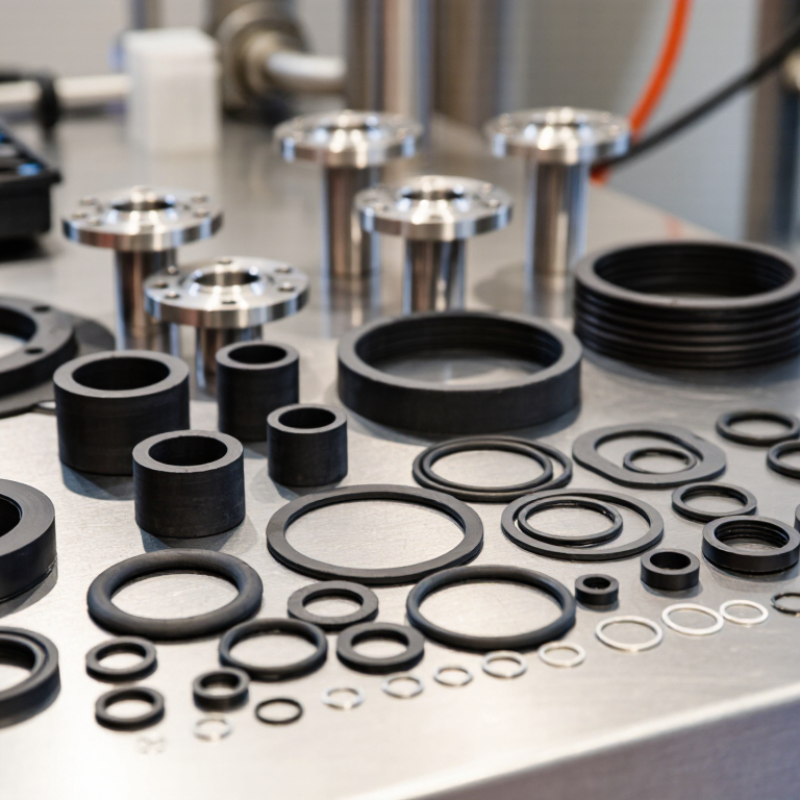
Gaskets and seals are small components with a demanding job. A gasket fills the uneven space between two stationary surfaces. A seal controls leakage around moving parts, shafts, or pistons. Together, they help contain oil, water, air, fuel, chemicals, and pressure. In a pump room, one worn seal can leave a thin trail across the floor. In a heat exchanger, a damaged gasket may reduce efficiency and create costly downtime. Global buyers need these parts because equipment often operates across changing temperatures, pressures, and working environments. The correct material matters. Rubber, graphite, PTFE, and metal each respond differently to heat, friction, and chemical exposure.
Tips: Confirm dimensions, operating temperature, pressure, media, and movement before ordering. Request material data, inspection records, and sample testing when the application is critical. Check tolerances carefully, not only the outside diameter. Small gaps can cause large failures. Packaging also deserves attention during international shipping. Moisture, compression, and poor labeling can damage otherwise suitable parts.
From practical sourcing experience, the cheapest option is not always the safest value. A seal may look identical but perform differently because of hardness, surface finish, or compound quality. I have seen specifications copied too quickly, leaving important details unclear. That is a useful warning. Buyers should compare drawings, test reports, production consistency, and supplier communication. A dependable manufacturer should explain limitations honestly, not promise universal performance. The right gasket or seal is selected for the whole system, not by appearance alone.
Gaskets create a static seal between stationary mating surfaces, while seals control leakage between moving or stationary components. The selection below summarizes commonly used product categories, materials, standards, and purchasing considerations for global buyers.
| Product Category | What It Is | Common Materials | Typical Service Characteristics | Common Applications | Relevant Standards or References | Key Buyer Checks |
|---|---|---|---|---|---|---|
| Compressed Non-Metallic Gaskets | Sheet or cut gaskets compressed between flanges to fill surface irregularities and prevent fluid leakage. | Compressed fiber, graphite, PTFE, aramid fiber, elastomer binders, and reinforced composite materials. | Suitable for many low- to medium-pressure services; chemical and temperature resistance depend strongly on the formulation. | Water, air, oils, chemicals, piping flanges, pumps, valves, and heat exchangers. | ASME B16.21; ASTM F104 material classification may be used for gasket material identification. | Media compatibility, flange dimensions, thickness, bolt load, surface finish, temperature, pressure, and replacement requirements. |
| Spiral-Wound Gaskets | A wound sealing element made from alternating layers of metal strip and filler, often with an inner and outer guide ring. | Stainless steel, carbon steel, nickel alloys, graphite, PTFE, and other approved fillers. | Designed for demanding temperature and pressure cycling when correctly selected and compressed. | Petrochemical plants, refineries, steam systems, pressure vessels, process piping, and heat exchangers. | ASME B16.20; flange dimensions are commonly coordinated with ASME B16.5 or ASME B16.47. | Winding construction, metal and filler grades, nominal size, pressure class, centering rings, compression requirements, and leakage performance. |
| Metallic Ring-Type Joint Gaskets | Precision-machined metal rings that seal in specially grooved flanges through controlled plastic deformation. | Carbon steel, stainless steel, and nickel-based alloys selected for the process environment. | Used for high-pressure and high-temperature services; installation requires clean, undamaged grooves and correct tightening. | Oil and gas production, high-pressure valves, wellhead equipment, and process systems. | ASME B16.20; API 6A is relevant for applicable wellhead and tree equipment interfaces. | Ring number, material grade, hardness, flange groove condition, pressure rating, temperature, and sour-service requirements where applicable. |
| Metal Jacketed Gaskets | A soft filler enclosed by a metallic jacket, providing structural support and improved resistance to heat or corrosive environments. | Stainless steel, nickel alloys, aluminum, copper, graphite, ceramic, or flexible mineral fillers. | Useful for heat exchangers and raised-face flanges where a robust, semi-metallic sealing element is required. | Heat exchangers, boilers, exhaust systems, pipe flanges, and high-temperature equipment. | Design and dimensions are commonly specified by application or engineering drawing; ASME B16.21 may apply to relevant non-metallic or semi-metallic flange gasket arrangements. | Jacket material, filler type, dimensions, flange flatness, temperature, pressure, thermal cycling, and repairability. |
| O-Rings | A circular elastomer ring that seals in a groove by radial or axial compression. | Nitrile rubber, EPDM, fluoroelastomer, silicone, chloroprene, polyurethane, and perfluoroelastomer compounds. | Available for static and dynamic sealing; performance depends on compound, hardness, squeeze, pressure, and chemical exposure. | Hydraulic and pneumatic cylinders, pumps, valves, automotive systems, appliances, medical equipment, and general machinery. | ISO 3601 for many industrial O-ring dimensions and quality requirements; AS568 is widely used for inch-series sizes. | Inside diameter, cross-section, compound, hardness, pressure gap, lubrication, temperature, fluid compatibility, and surface finish. |
| Oil Seals and Rotary Shaft Seals | A lip-style seal that retains lubricants and limits the entry of dust, water, or other contaminants around a rotating shaft. | Nitrile rubber, fluoroelastomer, silicone, polytetrafluoroethylene, steel cases, and spring elements. | Designed for rotating movement; allowable speed and temperature depend on lip design, shaft condition, lubrication, and material. | Gearboxes, electric motors, pumps, agricultural machinery, automotive drivetrains, and industrial rotating equipment. | ISO 6194 series provides references for rotary shaft lip-type seals. | Shaft diameter, housing bore, rotation direction, speed, pressure, lubricant, contamination level, installation method, and shaft wear. |
| Hydraulic and Pneumatic Rod Seals | Dynamic seals installed around a reciprocating rod to prevent fluid loss and protect the cylinder interior. | Polyurethane, PTFE compounds, nitrile rubber, fluoroelastomer, polyester elastomers, and reinforced materials. | Selected for reciprocating motion, pressure, speed, extrusion resistance, and compatibility with hydraulic or pneumatic media. | Hydraulic cylinders, pneumatic actuators, construction machinery, presses, material-handling equipment, and industrial automation. | ISO 5597 is used for certain hydraulic fluid power cylinder sealing systems; dimensional requirements can also be application-specific. | Rod diameter, housing groove, pressure, speed, temperature, fluid, back-up ring needs, wiper design, and installation tooling. |
| Mechanical Face Seals | A sealing assembly that uses two highly finished faces pressed together to control leakage along a rotating shaft. | Carbon, silicon carbide, tungsten carbide, stainless steel, elastomers, and engineering plastics. | Suitable for rotating equipment where low leakage is required; correct cooling, lubrication, alignment, and installation are critical. | Centrifugal pumps, mixers, agitators, compressors, wastewater equipment, and chemical-processing machinery. | EN 12756 provides dimensional and designation references for mechanical seals. | Shaft size, pressure, speed, fluid properties, face combination, elastomer compatibility, flush plan, emissions requirements, and installation space. |
| PTFE and Expanded PTFE Seals | Low-friction sealing products made from PTFE or expanded PTFE, often supplied as envelopes, sheets, cords, or machined profiles. | Virgin PTFE, filled PTFE, expanded PTFE, graphite-filled PTFE, and other engineered fluoropolymer compounds. | High chemical resistance and low friction; creep, cold flow, pressure, and temperature limits must be considered. | Chemical processing, food and pharmaceutical equipment, valves, pumps, flanges, and aggressive-media service. | Application-specific specifications may reference ASTM, FDA, EU food-contact, or pharmaceutical requirements depending on the service. | Purity, filler content, creep resistance, chemical compatibility, pressure, temperature, surface finish, and regulatory documentation. |
| Food, Pharmaceutical, and Hygienic Seals | Gaskets and seals designed for cleanability, controlled extractables, and compatibility with regulated processing environments. | Food-grade EPDM, silicone, PTFE, fluoroelastomer, and other documented elastomer or fluoropolymer compounds. | Must tolerate cleaning and sanitizing procedures while maintaining sealing performance and material traceability. | Dairy, beverage, food processing, biotechnology, pharmaceutical manufacturing, and clean-in-place systems. | FDA 21 CFR 177.2600 may apply to certain rubber articles; EU Regulation 1935/2004 may apply to food-contact materials; EHEDG guidance may support hygienic design. | Material declaration, traceability, surface finish, cleanability, sterilization method, temperature, chemical exposure, and migration or extractables documentation. |