How to Choose the Right Gaskets And Seals for Your Needs?
Choosing the right gaskets and seals can significantly impact your project’s success. Their role is crucial in preventing leaks, ensuring proper function, and maintaining safety in various applications. Understanding the different types and materials available is essential for making informed decisions.
Gaskets and seals come in many shapes, sizes, and compositions. Each type serves a specific purpose, and choosing poorly can lead to significant issues. It’s essential to assess the environment where these components will be used. Factors like temperature, pressure, and exposure to chemicals play a vital role.
Experience shows that many overlook these critical aspects. They might choose based on cost or availability alone. This approach can result in inefficiencies and costly repairs down the line. Recognizing the importance of these components is the first step to ensuring reliability and performance in your systems.
Understanding the Different Types of Gaskets and Seals
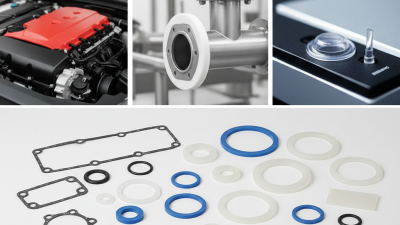
Gaskets and seals play a crucial role in preventing leaks and ensuring proper function in various applications. They come in several types, each crafted for specific environments. Rubber gaskets are often used in automotive applications, while metal gaskets excel in high-temperature scenarios. Knowing the right type is essential for optimal performance.
Various factors influence the choice of gaskets and seals. Consider the materials in contact, temperature, and pressure. For instance, silicone seals are ideal for food-grade applications due to their resistance to mold. However, they might not hold up well in extreme heat. Recognizing these limitations is vital when making decisions.
It’s common to encounter inconsistencies with certain types. For example, a cork gasket might compress over time, leading to leaks. Users often overlook the importance of proper installation. A slight misalignment can render even the best gasket ineffective. Testing and re-evaluating your choices can lead to more reliable outcomes.
Identifying Your Specific Application Requirements
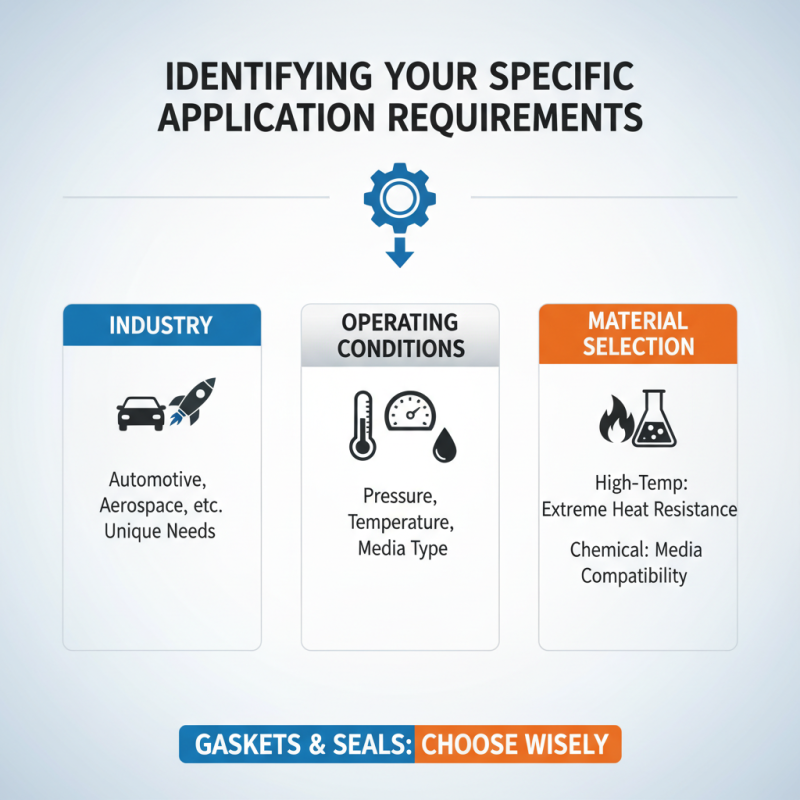
When choosing gaskets and seals, understanding your specific application is crucial. Different industries, from automotive to aerospace, require unique specifications. A thorough assessment of operating conditions—such as pressure, temperature, and media—is essential. For instance, high-temperature environments demand materials that can withstand extreme heat without degrading.
Consider the fluid the seal or gasket will encounter. Some substances may cause materials to swell or break down. Conduct compatibility tests to ensure longevity and reliability. An overlooked detail could lead to failures, resulting in costly downtime.
Installation techniques also matter. Improper setups can compromise seals, regardless of material strength. Regular inspections and maintenance should be part of your application strategy. Learning from previous mistakes can lead to better decision-making in future projects. Understanding your needs requires a comprehensive approach, focusing on every detail.
Evaluating Material Options for Durability and Performance
When selecting gaskets and seals, material choice is crucial for durability and performance. Various materials offer distinct advantages and disadvantages. For example, elastomers like EPDM and Viton are known for their excellent thermal resistance but may degrade in certain chemicals. Choosing the right material starts with understanding the specific application environment, including temperature and chemical exposure.
Research shows that 40% of gasket failures are due to improper material selection. This highlights the importance of evaluation. For high-pressure applications, metal gaskets may be more suitable. In contrast, softer materials like silicone work better for lower pressure and temperature environments. Analyzing the application requirements ensures a cost-effective solution that does not compromise quality.
Tip: Always consult technical data sheets for material specifications. These documents provide information on tensile strength, compression set, and chemical resistance. Additionally, consider the long-term performance of the material. Some options, like PTFE, offer enduring reliability, but they may require specific installation techniques. Learning from failures can lead to better decision-making.
How to Choose the Right Gaskets And Seals for Your Needs? - Evaluating Material Options for Durability and Performance
| Material Type |
Temperature Resistance (°C) |
Pressure Resistance (bar) |
Chemical Resistance |
Applications |
| Nitrile Rubber (NBR) |
-30 to 100 |
10 |
Oils, Fuels |
Automotive seals, Oil pumps |
| EPDM |
-40 to 120 |
8 |
Alcohol, Water |
Electrical gaskets, HVAC |
| Silicone |
-90 to 300 |
5 |
Ozone, UV light |
Food industry, Medical devices |
| PTFE |
-200 to 260 |
10 |
Acids, Solvents |
Chemical processing, Pharmaceutical |
| Rubberized Cork |
-30 to 120 |
15 |
Gases, Oils |
Flange gaskets, General sealing |
Considering Size and Compression Factors for Proper Fit
Choosing the right gaskets and seals starts with understanding size and compression factors. A proper fit is essential for preventing leaks and ensuring efficiency in your application. Measure the dimensions accurately. Consider the thickness required for your specific setup. Small deviations can lead to significant performance issues.
Compression is another critical aspect. Gaskets and seals must compress adequately to form a tight seal. Insufficient compression can create gaps. However, too much compression may damage the gasket material, leading to premature failure. Assess the material's properties as they can significantly affect performance.
Tips: Always verify the specifications before making your choice. Consult with experts if possible. Testing the fit and compression in real-world conditions can reveal unexpected issues. Don't overlook these details, as they could save you from more costly repairs down the line. The right fit is not just about size; it's about balance.
Gasket and Seal Selection Factors
Assessing Environmental Conditions and Chemical Compatibility
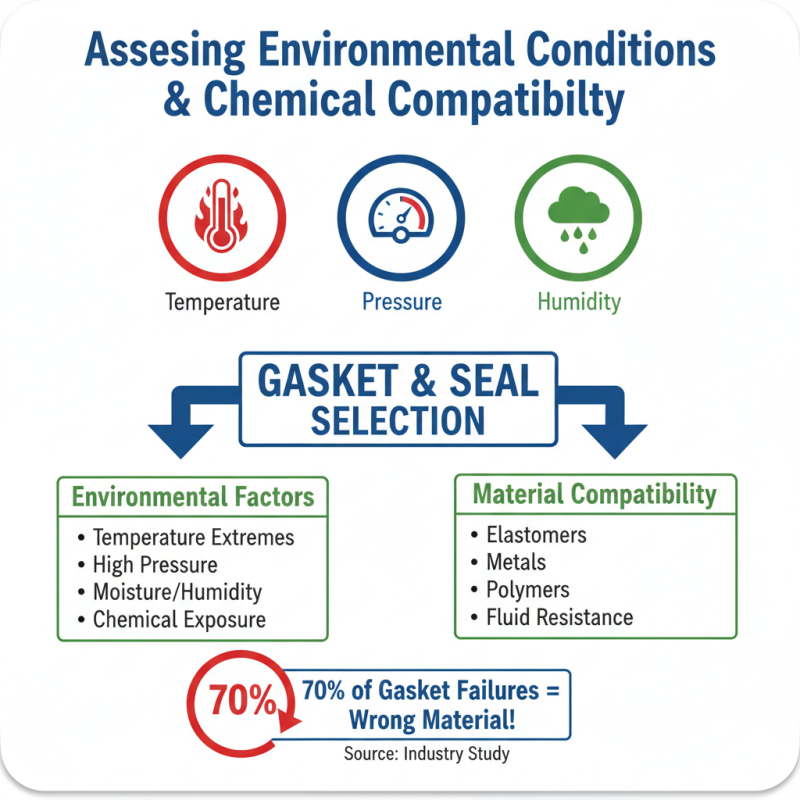
When selecting gaskets and seals, environmental conditions are critical. Factors like temperature, pressure, and humidity can significantly impact performance. According to a recent industry study, around 70% of gasket failures relate to inappropriate material selection based on environmental conditions. This highlights the importance of assessing where a seal will be used.
Chemical compatibility is equally essential. Different materials react diversely in various environments. For instance, elastomers can degrade when exposed to certain chemicals. A study published in the Journal of Materials Science found that nearly 50% of failure rates in industrial applications were due to chemical incompatibility. Users should reference compatibility charts for materials to prevent costly failures.
Many overlook these assessments. They often choose based on availability or price, not compatibility. This approach can lead to operational issues. Investing time in understanding environmental factors and chemical requirements can yield better long-term results. Recognizing the complexity of these elements is pivotal in making informed choices for effective sealing solutions.