Inquiry
Form loading...

How to Choose EPDM Rubber for Global Sourcing

Choosing Epdm Rubber for global sourcing is not a matter of comparing price per kilogram alone. A buyer must match the compound to its working environment, production process, and required service life. Will the seal face hot water, outdoor sunlight, ozone, or repeated compression? A gasket beside a boiler and a weatherstrip on a warehouse door may both use EPDM, yet need different formulations.

“Specify the service conditions before comparing quotations,” says Dr. Elena Voss, a fictional composite materials expert created for this introduction. This is an illustrative quotation, not a statement from a real, independently verified specialist. It captures a practical sourcing principle: a low-cost sample can become expensive if it hardens, swells, or loses its seal too soon.

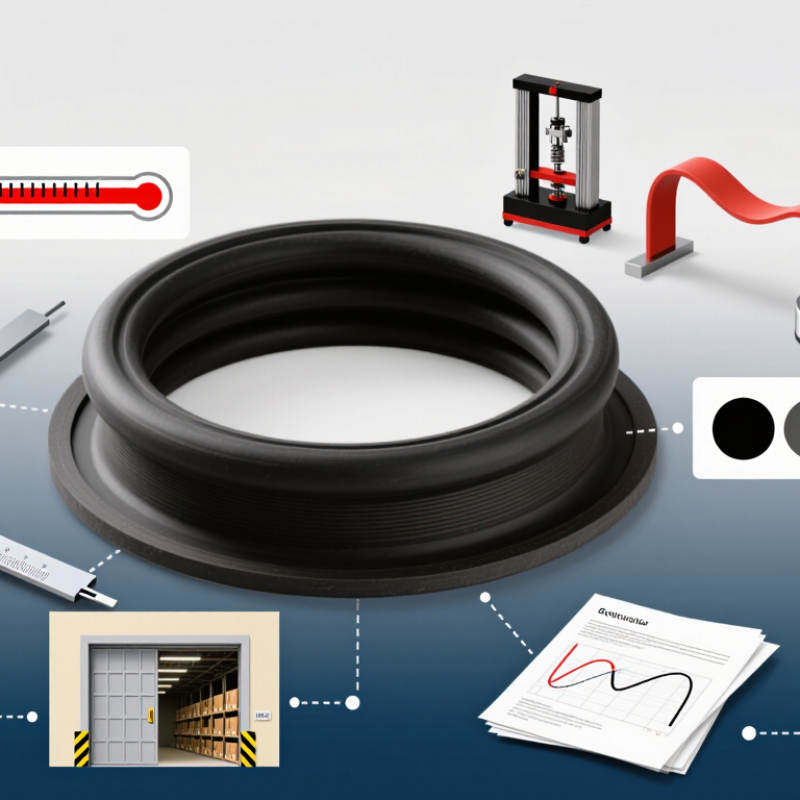
A reliable evaluation starts with measurable requirements. Define temperature range, hardness, tensile strength, elongation, compression set, color, and applicable test methods. Ask suppliers for technical data sheets and test reports tied to the quoted grade. Confirm whether the figures describe finished compounds or general product ranges; those are not always interchangeable. Request samples, then test them under conditions that resemble actual use. A neat datasheet is useful. It is not the whole story.

Compare suppliers on batch consistency, traceability, lead times, packaging, and communication—not just on an attractive first offer. Clarify tolerances and approval procedures before placing a large order. Keep written records of specifications and sample results. Some sourcing decisions still involve judgment; test conditions may not reproduce every field failure. That deserves reflection, not guesswork. With clear criteria and careful verification, buyers can choose Epdm Rubber with greater confidence across markets.
How to Choose EPDM Rubber for Global Sourcing

Define EPDM Rubber Requirements for the Intended Application

Define EPDM rubber requirements from the conditions it will actually face, not a generic “weather-resistant” label.

Record the working temperature range, exposure to water, ozone, sunlight, and chemicals, plus contact pressure and expected service life.

A seal near a hot pipe needs different limits from a roof membrane exposed to standing water. Small details matter.

Specify hardness in Shore A, tensile strength, elongation, and compression set, with test methods and acceptance limits.

ASTM D2000 provides a system for classifying rubber by properties and test requirements; ASTM D395 measures compression set, a useful indicator of how well a compressed seal recovers.

Ask suppliers for batch-specific test results, not just a catalogue range.

ISO 48-4 describes a method for measuring rubber hardness, while ASTM D573 covers heat-aging tests.

Compare results only when test conditions match: temperature, duration, specimen shape, and measurement method can change the numbers.

For example, a compression-set result after 22 hours at one temperature is not directly comparable with a result from a different test cycle.

Request data for the compound you plan to buy, and check whether it meets your limits after aging.

It can feel excessive. It is cheaper than discovering that a gasket softens, cracks, or leaks after installation.

Verify dimensions, tolerances, and production consistency too; the perfect lab sample is not always the part delivered.


Compare EPDM Grades, Properties, and Manufacturing Options

How to Choose EPDM Rubber for Global Sourcing

EPDM grades differ in ethylene content, diene level, molecular weight, and oil extension. These variables affect flexibility, weather resistance, compression set, and processing behavior. For outdoor seals, choose a grade with strong ozone and ultraviolet resistance. ASTM D2000 testing helps compare hardness, tensile strength, elongation, and heat aging. Do not compare hardness alone. A 70 Shore A compound may still perform poorly after repeated compression.

Manufacturing options also change performance and cost. Extrusion suits continuous profiles, while compression molding fits thicker gaskets and irregular shapes. Injection molding can improve repeatability for high-volume parts, but tooling costs rise. ISO 37 tensile testing and ISO 815 compression-set testing provide useful supplier comparisons. Ask for results at the actual service temperature, not only room temperature. The difference can be substantial.

Industry data supports careful material planning. Grand View Research estimated the global EPDM market at roughly USD 4 billion in 2023, with construction and automotive demand driving growth. Smithers reports that rubber processors increasingly use automated inspection and digital process control to reduce variation. These trends matter during global sourcing. Request batch traceability, cure curves, dimensional records, and samples from several production lots. Laboratory numbers can mislead. Field exposure, storage time, and installation quality may change results. I would also recheck the selected grade after pilot production, because the cheapest compound is rarely the lowest-cost choice.

Verify Supplier Capability, Quality Systems, and Documentation

Choosing EPDM rubber globally starts with supplier capability, not a low quoted price. Ask what the factory actually mixes, molds, tests, and ships. Request production photos, equipment lists, and recent capacity records. Confirm whether they control compound formulation or outsource it. That distinction affects consistency, lead time, and corrective action. Small details matter. Check mixer size, mold maintenance, curing controls, and trained inspection staff.

A capable supplier should operate a documented quality system, preferably aligned with ISO 9001 requirements. Do not accept a certificate as complete evidence. Review inspection plans for hardness, tensile strength, elongation, compression set, and dimensions. Ask for test methods, equipment calibration dates, and acceptance limits. Sample a recent batch and compare its report with your own test results. Results can disagree. That is not automatically failure, but unexplained differences deserve investigation.

Documentation should follow each shipment, not appear only after a problem. Request a certificate of analysis, material declaration, packing list, inspection report, and revision-controlled drawings. Every document should show the batch number, production date, quantity, and approval details. Traceability should lead from the finished gasket back to compound and raw material lots. During an audit, ask the supplier to retrieve one batch record within minutes. Slow retrieval is a warning sign. Even strong suppliers make mistakes. Review your own specifications too; vague requirements create avoidable disputes.

How to Choose EPDM Rubber for Global Sourcing

Verify supplier capability, quality systems, and documentation against the material properties required for the application.

Reference guide: Typical EPDM performance ranges vary by compound and application. Confirm the supplier’s certificate of analysis, test method, batch traceability, and compliance documents before approval. Tensile strength and elongation are commonly tested under ASTM D412 or ISO 37; hardness is commonly tested under ASTM D2240 or ISO 48-4; heat aging is commonly evaluated under ASTM D573.

Assess Regional Standards, Compliance, and Shipping Requirements

When sourcing EPDM rubber globally, regional requirements should shape the specification from the beginning. A compound suitable for outdoor seals may fail in a drinking-water system or electrical enclosure. Confirm temperature range, ozone resistance, hardness, tensile strength, and compression set with the actual application.

Regional standards vary. North American projects may request ASTM-based testing, while European buyers may require chemical declarations under REACH. Electrical products can also involve restricted-substance requirements. Food, medical, and drinking-water contact applications often need separate approvals and migration testing. Do not treat a supplier’s general compliance statement as enough. Request current test reports, material declarations, batch traceability, and the exact compound reference. Check whether documents cover the destination market and the finished part, not only the raw polymer.

Shipping details can quietly damage a good purchase. EPDM parts should be protected from sunlight, ozone sources, excessive heat, and deformation during storage. Use packaging that prevents compression marks during long ocean transport. Confirm carton dimensions, pallet limits, moisture protection, and labeling before production. Harmonized tariff classification and import documents should match the product description. Small errors can delay clearance. They happen.

I have seen buyers approve samples without checking storage conditions or transit time. That decision looked efficient, but it weakened the qualification process. A better review includes production tolerances, inspection frequency, retained samples, and a written plan for nonconforming goods. Regional holidays and port congestion also deserve attention. A reliable shipping schedule is never guaranteed.

Validate Samples and Compare Total Sourcing Costs

Before approving an EPDM compound, test production-representative samples—not just a supplier’s polished catalogue sheet. Check hardness, tensile strength, elongation, and compression set against the part’s actual operating conditions. For a gasket, compress a sample to its working thickness and inspect recovery after heat aging; a good Shore A reading alone proves little. Ask for batch traceability and test methods, such as ASTM D412 for tensile properties. Repeat key checks on more than one sample lot. It takes time. I have seen teams focus on color and dimensions, then discover the compound stiffens after exposure to heat. That is an easy miss.

Compare total sourcing costs, not just the quoted price per kilogram. Include tooling, minimum order quantities, inspection, packaging, freight, insurance, duties, and the cost of rejected parts or delayed replenishment. UNCTAD’s Review of Maritime Transport 2024 reports that global maritime trade grew 2.4% in 2023 and was forecast to grow 2.7% in 2024, while shipping faced disruption and uncertainty. That context makes a low factory price less reassuring when delivery routes or lead times shift. Request comparable quotations using the same specification and shipment terms, then model at least one delay scenario. The comparison may still be imperfect: actual scrap rates and port delays are hard to predict. Record your assumptions, and revisit them after the first order.