How to Choose the Right Resilient Seated Valve in 2026?
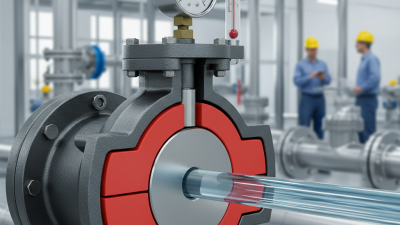
Choosing the right Resilient Seated Valve in 2026 requires more than matching pipe size and pressure class. Water networks are becoming older, more automated, and less forgiving. A small sealing mistake can produce visible leakage, pressure loss, and an expensive excavation months later. The World Bank estimates that water utilities can lose roughly 30% of supplied water through non-revenue water in many systems. That figure makes dependable isolation equipment a practical priority.
Market forecasts also show continuing demand. Grand View Research valued the global industrial valves market at approximately USD 77.5 billion in 2023, with steady growth expected through 2030. However, market growth does not guarantee correct selection. Media chemistry, operating temperature, buried installation, cycling frequency, flange standards, and local drinking-water approvals still matter. Sometimes, the cheapest valve becomes the costliest component. We should admit that catalog data rarely explains real installation conditions clearly.
Valve-selection author John V. Ballun emphasizes, “The selection of valves for a particular service is one of the most important decisions.” His point remains highly relevant. A resilient-seated design may suit clean water, wastewater, fire protection, and many low-temperature services, but its EPDM or NBR seat must match the medium. Check torque, pressure drop, coating thickness, stem protection, and test certification before ordering. Look closely at the details. They decide reliability.
This guide compares those factors for 2026 projects. It also questions common assumptions, including the belief that every soft-seated valve performs equally underground. The better choice is not always the most advanced one. It is the valve that fits the complete duty, installation environment, maintenance plan, and compliance requirements.
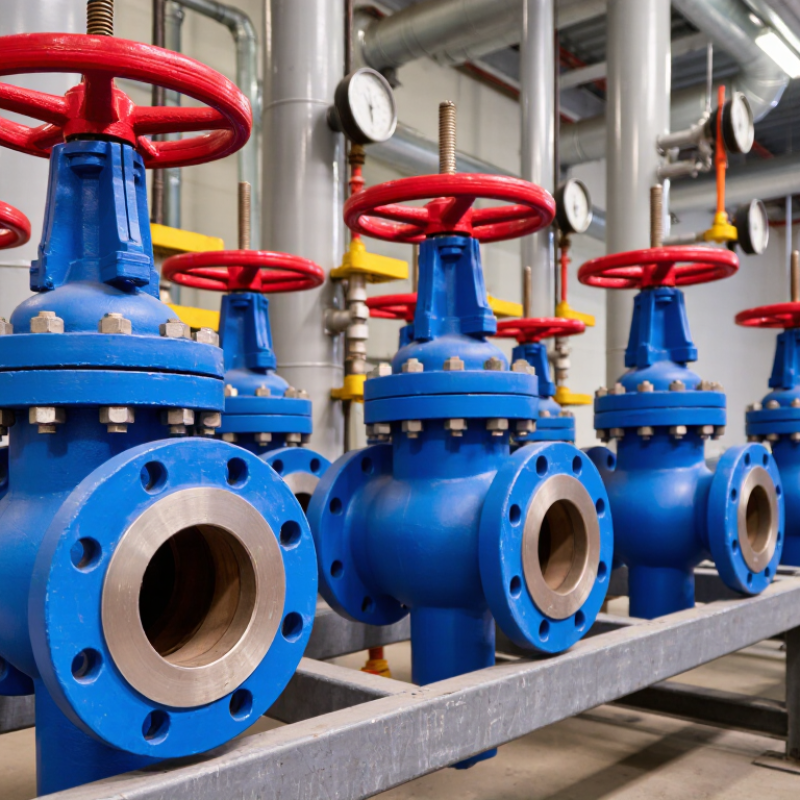
Define Service Conditions with AWWA C509/C515 Pressure Classes up to 250 psi
Selecting a resilient-seated valve in 2026 starts with service conditions, not catalog price. AWWA C509 and C515 define pressure classes of 150, 200, and 250 psi for water-service gate valves. The class must exceed normal line pressure and foreseeable surge. Static pressure alone is incomplete.
In field reviews, I check the pipeline profile, pump starts, closure speed, temperature, and transient calculations. A valve facing 145 psi continuously may not be suitable for a 200 psi system. A sudden shutdown can create damaging pressure waves. Confirm flange drilling, end connections, installation orientation, and buried-depth requirements before approval. Small details matter.
The U.S. Environmental Protection Agency’s 7th Drinking Water Infrastructure Needs Survey estimates $625 billion in investment needs over the next 20 years. That scale makes maintainability important. AWWA C509 generally addresses standard resilient-seated gate valves, while C515 focuses on reduced-wall designs. Reduced wall does not mean reduced responsibility. Verify the manufacturer’s certified pressure rating, material requirements, coating system, and test documentation. ASCE’s 2021 Infrastructure Report Card rated U.S. drinking-water infrastructure C-, showing why failures and access costs deserve serious attention. I would still challenge one common assumption: selecting the highest class is not always the best engineering decision. It can increase cost, operating torque, and component loads without solving transient conditions. Use a documented design basis, and revisit it when the network changes.
Select EPDM or NBR Seats for Typical Media and −20–120°C Service
How to Choose the Right Resilient Seated Valve in 2026?
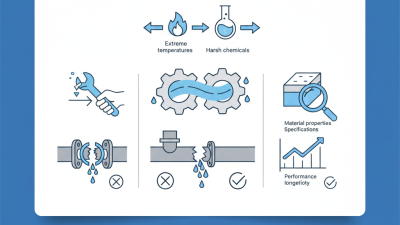
EPDM and NBR are not interchangeable. EPDM suits water, hot water, steam, dilute acids, and alkalis. NBR performs better with mineral oils, hydraulic fluids, and many hydrocarbons. It is a practical distinction, not a marketing detail. The U.S. Department of Energy identifies industrial fluid leakage as a recurring efficiency concern, so seat selection deserves engineering attention.
For −20–120°C service, confirm the compound’s certified temperature range. Standard NBR often approaches its upper limit near 100°C, while heat-resistant grades may reach 120°C. EPDM commonly handles hot water near 120°C, but petroleum-based fluids can cause swelling. ASTM D2000 testing evaluates heat aging, tensile change, and elongation loss; those results are more useful than a catalogue temperature alone. Check them.
Pressure matters too. ISO 23936-2 highlights immersion, aging, and decompression testing for elastomer qualification in demanding applications. A valve carrying hot glycol may need different testing than one carrying cold process water. We have seen failures caused by the wrong fluid assumption. Small details matter. Verify concentration, cycling frequency, shutoff pressure, and cleaning chemicals before ordering. If the media is mixed or uncertain, request compatibility data at the actual temperature, not merely a general EPDM or NBR recommendation.
Size DN/NPS and Cv to Keep Water Velocity below 3 m/s
How to Choose the Right Resilient Seated Valve in 2026?
Selecting a resilient seated valve starts with the actual duty flow, not the pipeline diameter alone. Measure at duty flow. For water, calculate velocity with v = Q/A, where Q is flow rate and A is the valve passage area. Keep the resulting velocity below 3 m/s when the system design requires this limit. A DN or NPS size that matches the pipe may still create excessive velocity through a reduced valve bore.
Use the operating flow to estimate Cv, then check the available pressure drop. For water, Cv relates flow to pressure loss under defined test conditions. Do not select a valve from its maximum Cv alone. Compare the required Cv with the valve’s practical control range, full-open bore, and upstream pressure. A valve that is too small may produce noise, erosion, and unstable flow. One that is oversized may operate nearly closed, reducing control quality.
In field projects, I also review peak flow, minimum flow, temperature, and installation limits. My early selections were too optimistic because I used average flow instead of peak demand. That mistake matters. Check the manufacturer’s certified data and confirm the final velocity after considering reducers, strainers, and nearby fittings. Field data can disagree. When uncertainty remains, document the assumption and verify it during commissioning.
Verify ISO 5208 Rate A Tightness and NSF/ANSI 61 Compliance
How to Choose the Right Resilient Seated Valve in 2026?
A resilient seated valve must prove more than pressure resistance. Ask for documented ISO 5208 testing, with Rate A tightness clearly stated. Rate A means no visible leakage during the specified closure test. The report should identify the valve size, pressure, test medium, and test direction. A vague “bubble-tight” claim is not enough.
Check how the test reflects real installation. Confirm the seat material, stem design, and closing torque. Dirt on the sealing surface can cause leakage after commissioning. Clean pipework matters. It is easy to blame the valve too quickly. In practice, poor alignment and trapped debris often deserve attention first.
For potable water service, verify NSF/ANSI 61 compliance for the complete wetted configuration. This includes the body lining, resilient seat, coatings, lubricants, and other contact materials. Certification may apply only to specific sizes, temperatures, or pressure ranges. Read the certificate scope carefully. Do not rely on a supplier’s general statement. Request current documentation and check its validity with the certification body. Field records should connect the installed valve to its test report and material details. That step feels tedious, but missing paperwork can weaken an otherwise sound technical decision.
Evaluate Torque, Coatings, Actuation, and 25-Year Life-Cycle Cost
Selecting a resilient seated valve in 2026 requires more than matching pipe size. Measure breakaway and running torque under real pressure, not only catalog values. Add margin for seat aging, temperature, and infrequent operation. A 25% margin may be insufficient for buried valves with sediment. That is easy to underestimate.
Coating selection should follow soil chemistry, immersion risk, and surface preparation quality. AMPP’s IMPACT study estimated global corrosion costs at about $2.5 trillion annually, or 3.4% of global GDP. This figure supports serious coating decisions, but it does not predict one valve’s service life. Ask for coating thickness, holiday testing, adhesion results, and repair procedures. ISO 5208 leakage testing verifies performance, not necessarily 25-year durability. The distinction matters.
Actuation changes the life-cycle calculation. Electric actuators may simplify remote monitoring, while pneumatic units can deliver fast fail-safe movement where compressed air is dependable. Compare purchase price, installation, energy, inspection, spare parts, and planned replacement over 25 years. Include actuator cycling data and manual override effort. A low-torque valve can reduce actuator size and energy demand, but only when torque measurements are credible. A spreadsheet can still lie. Use site history, supplier test records, and independent inspection evidence. The final choice should balance torque stability, coating resilience, control needs, and total ownership cost, rather than rewarding the cheapest quotation.
How to Choose the Right Resilient Seated Valve in 2026?
Torque, coating thickness, actuation method, and estimated 25-year life-cycle cost for a representative DN150 water-service valve.
Engineering interpretation
Lower operating torque reduces actuator sizing and energy demand, while a thicker fusion-bonded epoxy coating generally provides greater protection against external corrosion when properly applied. Manual actuation has the lowest 25-year cost for infrequent operation; electric actuation becomes more practical when remote control, automation, or frequent cycling is required. The cost model assumes a DN150 valve, 10 operating cycles per day, routine maintenance, and one actuator replacement during the study period.