How to Choose the Right Rubber Material for Your Project in 2026?
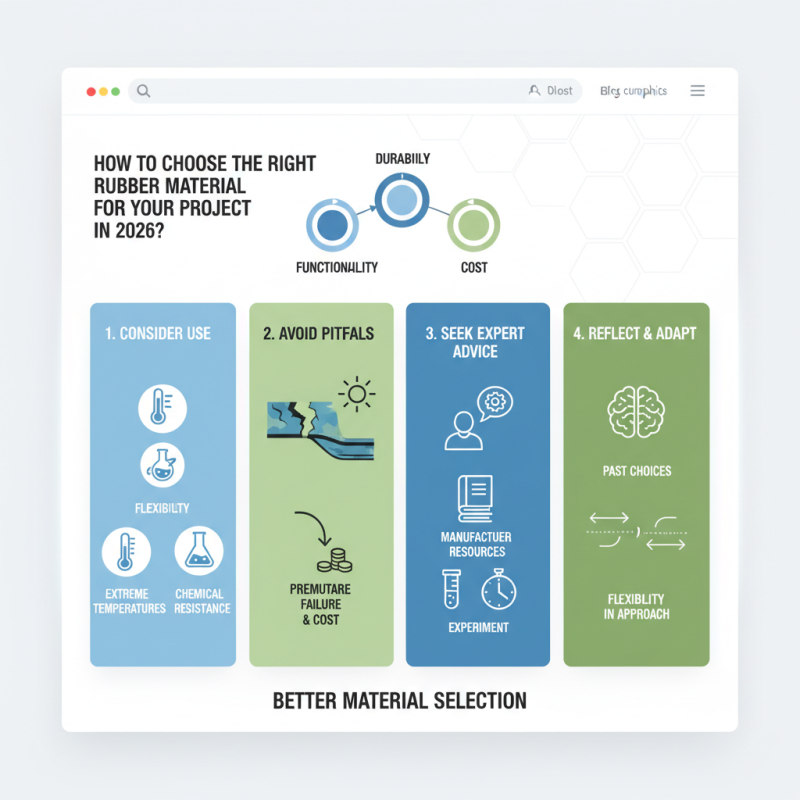
Choosing the right Rubber Material for your project in 2026 is crucial. With advancements in technology, the options can be overwhelming. Each type of rubber has unique properties that affect functionality, durability, and cost.
Consider how the material will be used. Will it face extreme temperatures? Is flexibility important? Do you require chemical resistance? These questions guide your choice. Often, people overlook critical factors. For example, not all rubber materials perform well in outdoor conditions. This can lead to premature failure and additional costs.
Seek out expert advice. Manufacturers offer extensive resources to help you understand your options. However, don’t hesitate to experiment. Test different materials to see how they perform in real-world scenarios. Reflecting on past choices can inform better decisions. Flexibility in your approach often leads to better results in material selection.
Understanding the Importance of Selecting the Right Rubber Material
Choosing the right rubber material is critical for project success in 2026. The correct selection can lead to durability and efficiency. Industry reports estimate that improper material choices lead to up to 30% additional project costs. This highlights the importance of meticulous selection.
Different applications require various rubber properties. For instance, high-temperature applications may need silicone rubber. This material can withstand temperatures of up to 300°C. On the other hand, applications exposed to oils often benefit from nitrile rubber. Understanding these unique properties can prevent costly mistakes down the road.
Moreover, sustainable options are emerging in the market. Natural rubber and bio-based alternatives are gaining popularity. A recent study showed a 40% increase in demand for eco-friendly materials. However, relying solely on these materials without proper testing can backfire. It's crucial to balance sustainability with performance. Making informed choices often requires deeper research and testing. The perfect rubber material is not always the most obvious one.
How to Choose the Right Rubber Material for Your Project in 2026? - Understanding the Importance of Selecting the Right Rubber Material
| Rubber Material |
Properties |
Applications |
Temperature Range (°C) |
Cost (per kg) |
| Natural Rubber (NR) |
High elasticity, good tensile strength |
Tires, footwear, gaskets |
-50 to 80 |
$2.00 |
| Synthetic Rubber (SR) |
Good resistance to oils and solvents |
Automotive parts, hoses, seals |
-40 to 120 |
$3.50 |
| EPDM Rubber |
Excellent weathering and ozone resistance |
Roofing, seals, electrical insulation |
-50 to 150 |
$4.00 |
| Nitrile Rubber (NBR) |
Good oil and fuel resistance |
Fuel hoses, seals, O-rings |
-40 to 120 |
$5.00 |
| Silicone Rubber |
Excellent temperature stability, flexible |
Medical devices, cookware, automotive parts |
-60 to 200 |
$10.00 |
Identifying Key Properties of Rubber Materials for Different Applications
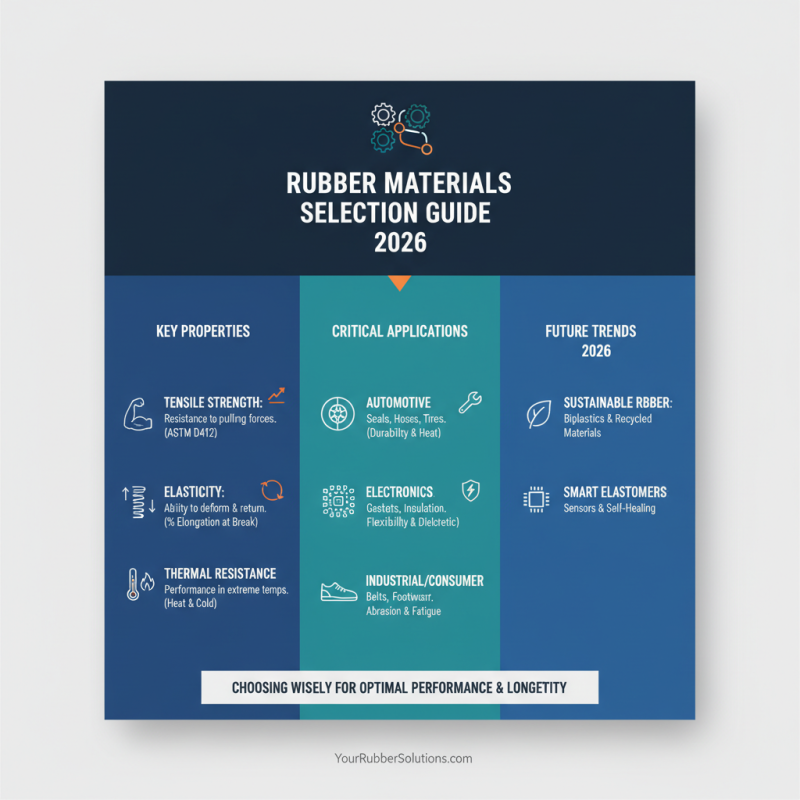
Choosing the right rubber material for your project in 2026 requires understanding essential properties. Rubber materials exhibit key characteristics like tensile strength, elasticity, and thermal resistance. For instance, the ASTM D412 standard provides data on tensile strength and elongation at break, critical for many applications.
Tips: Identify the primary stress conditions your rubber will face. Think about whether it will be compressed, stretched, or exposed to chemicals. Each scenario demands specific rubber properties.
Different applications require different rubber types. Natural rubber offers excellent elasticity but less heat resistance. Synthetic options, like nitrile, resist oils better. A report by the Rubber Manufacturers Association noted that 35% of rubber products in 2023 required oil resistance for durability.
Tips: Conduct tests on sample materials before final selection. Analyze how each type responds to stress and environmental changes.
In some cases, the choice might seem overwhelming. Unpredictable factors, like humidity and temperature, can alter performance. It’s vital to revisit your decisions periodically and adjust as needed. This process ensures the selected rubber material aligns well with evolving project requirements.
Comparing Common Types of Rubber: Natural vs. Synthetic Options
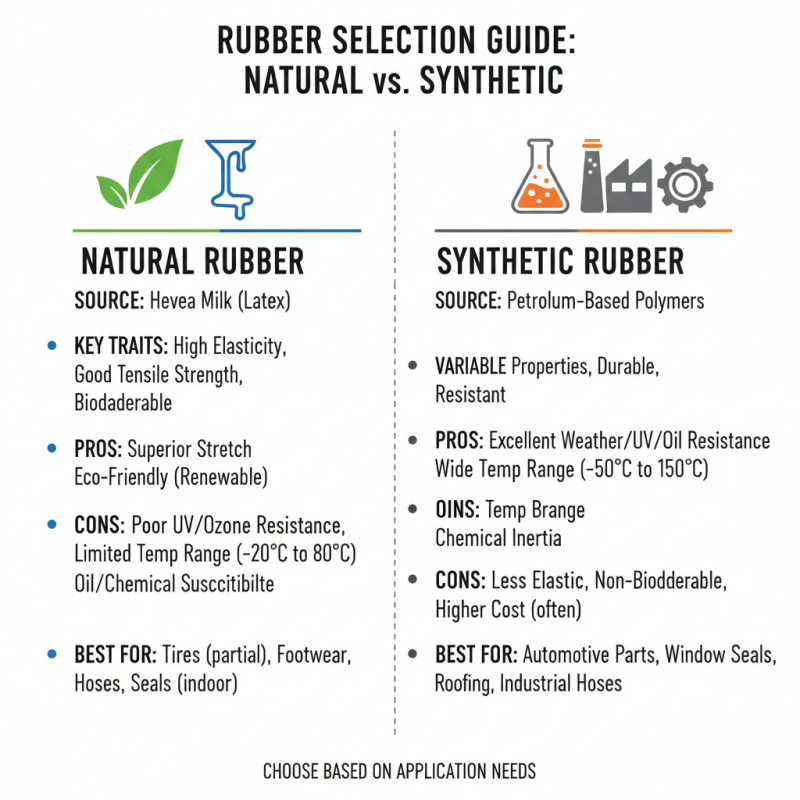
When selecting rubber for your project, understanding the differences between natural and synthetic options is crucial. Natural rubber is derived from latex. It offers excellent elasticity and tensile strength. However, it can be prone to degradation from UV exposure and extreme temperatures. This limits its outdoor applications.
Synthetic rubber, on the other hand, is made from petrochemicals. It comes in various forms, each designed for specific needs. For example, neoprene is great for weather resistance. Meanwhile, butyl rubber excels in airtight applications. Despite their advantages, synthetic rubbers can be less sustainable than their natural counterparts. This creates a dilemma for environmentally conscious projects.
Choosing the right type often requires careful consideration. Think about the environmental impact. Consider your project’s demands. Will the rubber face harsh conditions? Reflect on potential trade-offs. Balancing durability and sustainability can be challenging, but it's essential for long-lasting results.
Evaluating Environmental and Sustainability Factors in Rubber Choices
When selecting rubber materials for sustainability in 2026, consider environmental impacts. The sourcing and production processes matter. Many rubber products harm ecosystems. For example, traditional rubber often involves deforestation. Investigate natural alternatives that support reforestation efforts. Look for materials certified for sustainable practices.
Recycling options also play a critical role. Some rubber types can be recycled multiple times. This reduces waste significantly. However, not all materials are equally recyclable. Understanding the lifecycle of rubber is essential. What happens to the material after its use? Seek information on end-of-life options for each type.
Another aspect to ponder is the durability of rubber. A longer-lasting material can mean less frequent replacements. This factor can influence the overall environmental footprint. Some rubber materials claim durability but fall short in real-world applications. Conduct thorough research, and don’t overlook your findings. Making informed decisions will lead to better outcomes.
Assessing the Cost-Effectiveness of Various Rubber Materials for Your Project
When assessing the cost-effectiveness of rubber materials for your project in 2026, start by considering your specific needs. The right material should balance performance and budget. Some rubbers are pricier but offer durability. Others are affordable but may wear out quickly. It's crucial to understand how these factors align with your goals.
Evaluate the long-term costs. Cheaper materials might save you money upfront. However, frequent replacements could lead to higher overall expenses. For example, if you need a rubber that withstands high temperatures, investing in a quality option is wise. Short-term savings might result in long-term issues.
Don't overlook the environmental impact of your choices. Some rubber materials are recyclable or biodegradable, while others are not. It might be tempting to choose a cheaper option, but consider the consequences. Reflecting on the sustainability of your project can help in making a responsible decision. A balance between cost, performance, and sustainability is vital for any successful project.
Cost-Effectiveness of Rubber Materials for Projects in 2026