How to Choose the Right Center Line Valve for Your Application?
Choosing the right Center Line Valve for your application can be a challenge. Engineers often face tough decisions when selecting the best valve. Industry data shows that improper valve selection can lead to inefficiencies. According to a recent report by the Valve Manufacturer's Association, nearly 30% of valve installations encounter operational issues due to incorrect specification.
Expert Marshall Kline, a leader with over twenty years in valve technology, emphasizes, “Understanding the specific needs of your system is crucial.” This insight reflects a common issue in the industry. Many professionals overlook key factors, such as pressure, flow rates, and medium compatibility. These oversights can result in increased costs and downtime.
The Center Line Valve, known for its reliable performance, is not always the answer for every scenario. Each application has unique demands. Engineers must weigh factors like material, seal types, and installation conditions. Failing to address these can lead to regrets. Selecting the proper Center Line Valve is more than just a technical choice; it’s about aligning features with application needs.

Understanding Center Line Valves and Their Applications
Center line valves are vital components in various applications. They provide reliable control for fluids and gases. Understanding their design and function is essential for effective usage. These valves allow for a straight flow path, minimizing resistance. This helps reduce pressure drop and improve efficiency.
In many industries, center line valves are used in piping systems. They are ideal for handling shear-sensitive fluids. The short distance between the seat and the disc aids in maintaining integrity. Operators often overlook pressure ratings and temperature limits. These factors can impact performance significantly.
Choosing the right center line valve requires careful consideration. Factors include medium type and flow rate. Users should also think about installation requirements. Some applications may face space constraints. Ensure the valve fits within system designs. It’s a common mistake to prioritize cost over functionality. Balancing these aspects is crucial for long-term reliability.
Center Line Valve Applications and Their Performance Metrics
This bar chart illustrates the performance metrics of different types of center line valves in various applications. The data represents the flow rate (in GPM) of each valve type under different pressure conditions.
Identifying Key Factors in Valve Selection Process
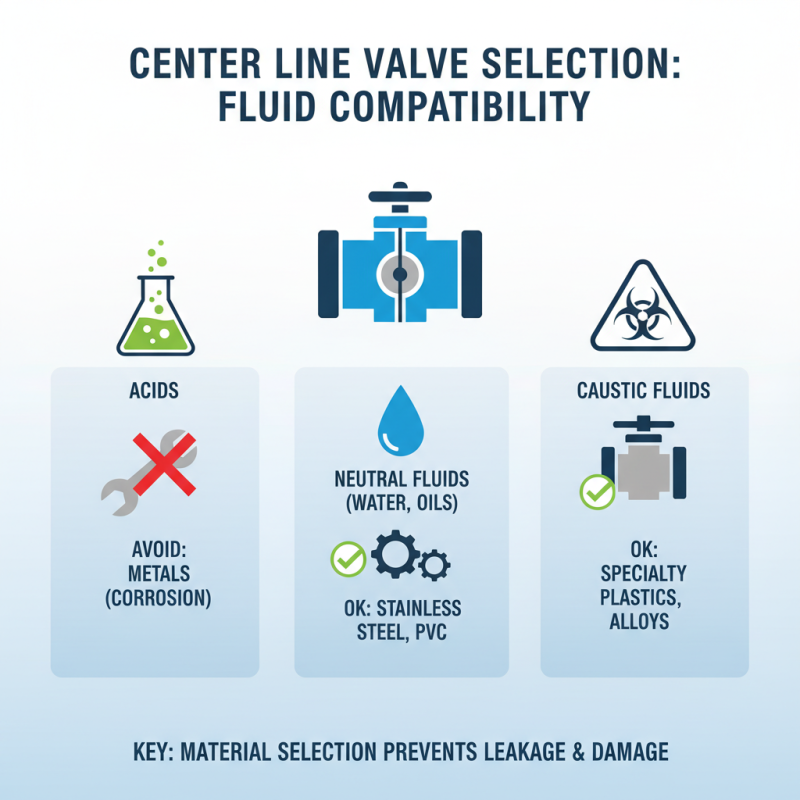
When choosing a center line valve, several factors come into play. The application type is crucial. Will it handle liquids, gases, or both? Each has unique requirements. Pressure ratings also matter. High-pressure applications need robust valves. Low-pressure systems might not require the same strength. Consider the materials too. Corrosive environments demand specific materials to ensure longevity.
Size and connection type cannot be overlooked. A mismatch in size can lead to inefficiencies. Connection types need to align with existing piping. Think about the valve's flow characteristics, too. A valve might perform well on paper but underdeliver in practice. Sometimes, practical evaluations or simulations can reveal these insights.
Maintenance is often forgotten but vital. Some valves are easy to maintain, while others require specialized tools. Think about the accessibility of the valve in your setup. Poor access may lead to neglect and eventual failure. Factor in the total cost of ownership. A cheaper valve may end up costing more in the long run. Reflect on these considerations before making a decision.
How to Choose the Right Center Line Valve for Your Application? - Identifying Key Factors in Valve Selection Process
| Factor |
Description |
Importance Level |
Common Applications |
| Material |
Selecting the correct material ensures compatibility with the fluid and the working environment. |
High |
Chemical processing, Oil & Gas |
| Pressure Rating |
Determines the maximum pressure the valve can handle; critical for safety. |
High |
Water supply, Petrochemical |
| Temperature Range |
Valves must be rated for the temperatures of the media being controlled. |
Medium |
HVAC systems, Steam systems |
| Size |
The diameter affects flow rate; selecting the right size is crucial to prevent flow issues. |
Medium |
Pulp & paper, Water treatment |
| Actuation Type |
Determines how the valve will be operated (manual, electric, pneumatic). |
Medium |
Automated systems, Industrial processes |
| Flow Direction |
Understanding whether the valve is needed for bi-directional flow or uni-directional flow. |
Low |
Various process applications |
| Certifications |
Ensures compliance with industry standards and regulations. |
High |
Pharmaceutical, Food processing |
Evaluating Material and Design Considerations for Center Line Valves
When selecting a center line valve, material choice is critical. The valve's material should match the application's specific conditions. Consider factors such as pressure, temperature, and chemical exposure. Common materials include stainless steel and PVC. Each option has its own advantages and disadvantages. Think about how corrosion or wear can impact performance over time.
Design aspects also play a significant role. Center line valves have various designs tailored for different applications. Flanged, welded, or threaded connections all serve different purposes. Evaluate the layout of your piping system. Is space a concern? A compact design might be necessary. Weight and balance can affect installation and maintenance.
Tips:
Always match the valve's design with specific operational conditions. This alignment can improve efficiency. Regularly assess the valve's performance. Small leaks or unusual noises often signal larger issues. Consider consulting with a professional if you are unsure. This could save you time and resources.
Assessing Pressure and Temperature Ratings for Specific Use Cases
Choosing the right center line valve begins with understanding your specific application's
pressure and
temperature requirements. Each application can greatly differ.
Some may face extreme temperatures, while others may not. Accurately assessing these factors is crucial.
Pressure ratings indicate the maximum pressure the valve can handle.
High-pressure applications need durable materials.
Conversely, low-pressure systems might require less robust components.
Matching the valve to these specifications can prevent failures.
A failed valve can lead to leaks, costly repairs, or safety hazards.
Temperature ratings are equally important. Valves might expand or contract with heat.
This can create problems if not considered. For instance, a valve rated for high temperatures but
used in a cooler system may perform poorly. An overlooked detail could lead to inefficiencies.
Reflecting on these factors is vital for a successful application.