How to Choose Nitrile Rubber for Your Applications?
When selecting materials for various applications, Nitrile Rubber stands out as a reliable choice. This synthetic rubber, known for its excellent resistance to oils, fuels, and chemicals, is widely used in industries like automotive and aerospace. Its versatility makes it appealing for diverse applications, yet the selection process can be complex.
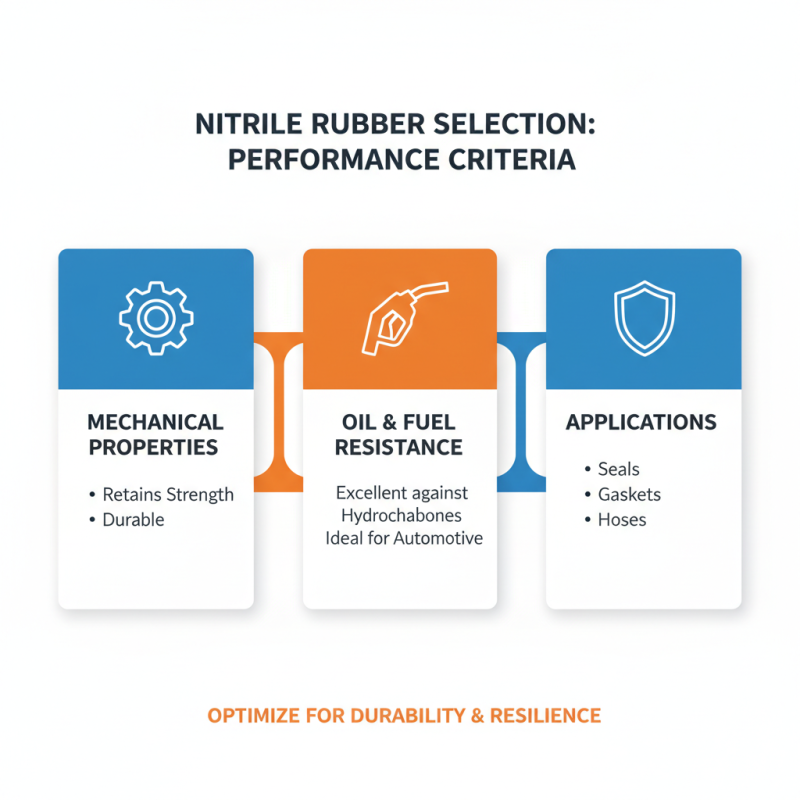
Choosing the right Nitrile Rubber involves understanding its properties. Different grades offer varying levels of flexibility, hardness, and chemical resistance. For example, higher acrylonitrile content increases oil resistance, but also makes the rubber stiffer. Balancing these qualities is crucial for optimal performance in specific applications.
Additionally, consider factors like temperature range and exposure conditions. While Nitrile Rubber can withstand a wide range, extreme conditions may require special formulations. Biases in personal experience could lead to overlooking key details when making a choice. This highlights the importance of thorough research and understanding your specific needs in the selection process.

Understanding Nitrile Rubber: Properties and Variants
Nitrile rubber, also known as NBR, is a synthetic copolymer. It offers excellent resistance to oils and fuels. This property makes it a popular choice for automotive and industrial applications. According to the Global Nitrile Rubber Market Report, the demand for nitrile rubber is expected to grow steadily, reaching a market size of $1.7 billion by 2025.
There are several variants of nitrile rubber. The most common types include standard, high-acrylonitrile, and low-acrylonitrile rubber. The acrylonitrile content significantly impacts their properties. For instance, high-acrylonitrile nitrile rubber contains over 40% acrylonitrile. This variant offers heightened resistance to solvents and fuels. On the downside, it can be less flexible at low temperatures.
Choosing the right type is crucial. Too much focus on oil resistance may overlook temperature flexibility. Users often face challenges balancing these properties. It's essential to assess specific application requirements before making a decision. Data from industry experts indicate that improper choices can lead to premature failure and costly downtime. Understanding these characteristics is vital for optimizing application performance.
Identifying Your Application Needs for Nitrile Rubber
When selecting nitrile rubber, it's crucial to identify your specific application needs. Consider the environment where the material will be used. Will it be exposed to high temperatures or chemicals? Nitrile rubber has various grades suited for different conditions. For example, a higher oil resistance is essential in the automotive sector. This detail impacts durability.
Another key factor is the hardness of the rubber. Measured in Shore A, it plays a significant role in how the material performs under pressure. A softer rubber might provide better flexibility, while a harder compound offers strength. Balance is necessary. If the hardness isn't right, you may face issues like premature wear or failure.
Don't overlook testing and validation processes. It's easy to assume one grade fits all needs. Real-world scenarios can reveal weaknesses in your choice. Engaging with prototypes can uncover issues early on. Thorough evaluation can guide adjustments to ensure longevity and reliability in your application.
Factors to Consider When Selecting Nitrile Rubber Grades
When selecting nitrile rubber for various applications, several factors play a crucial role. Understanding the properties and performance of different nitrile grades is essential. The primary focus should be on oil resistance, temperature tolerance, and flexibility. The right balance ensures optimal performance in demanding environments.
Tips: Choose the grade based on intended use. For high oil exposure, opt for a nitrile with higher acrylonitrile content. For applications requiring extreme temperatures, check material specifications thoroughly. A flexible option may be necessary for some designs.
Consider the environment where the nitrile rubber will be used. The surrounding conditions can greatly affect performance. For instance, exposure to ozone can degrade certain grades quickly. It's important to assess the compatibility of the rubber with the anticipated conditions.
Tips: Experiment with sample materials to see how they behave under your specific circumstances. Don't overlook how the rubber interacts with other materials in your application. Small details can lead to significant improvements or unforeseen issues.
How to Choose Nitrile Rubber for Your Applications? - Factors to Consider When Selecting Nitrile Rubber Grades
| Grade |
Acrylonitrile Content (%) |
Hardness (Shore A) |
Operating Temperature (°C) |
Typical Applications |
| NBR 34 |
34 |
70 |
-30 to 90 |
Automotive seals, gaskets |
| NBR 47 |
47 |
75 |
-30 to 120 |
Industrial hoses, oil seals |
| NBR 50 |
50 |
80 |
-20 to 110 |
Fuel systems, gaskets |
| NBR 55 |
55 |
90 |
-30 to 140 |
Heavy machinery seals, automotive applications |
| NBR 60 |
60 |
85 |
-30 to 120 |
O-rings, electrical insulation |
Best Practices for Procurement and Sourcing of Nitrile Rubber
When procuring nitrile rubber, it’s crucial to understand your specific application needs. Consider the environment where the rubber will be used. Temperature, chemical exposure, and mechanical stress should all influence your choice. Different grades of nitrile rubber exist, each suited for various applications. It’s not just about the type but the specifications as well. You might need a soft compound for flexibility or a harder one for durability.
Sourcing nitrile rubber involves multiple steps. Research suppliers that specialize in rubber materials. Request samples to test compatibility with your needs. Pay attention to the suppliers' certifications and quality controls. Communication is vital, so provide detailed requirements. However, be prepared for some trial and error. Sometimes, the first choice may not meet expectations. Learn from these experiences to refine your procurement strategy.
Price is important, but it should not be the only factor. Evaluate the overall value offered by suppliers. Read reviews and seek recommendations, but remember to trust your instincts. Sometimes, a supplier may provide exceptional service but lack certain product specifications. Reflect on past purchases and consider how those experiences shape your current choices.
Choosing Nitrile Rubber: Key Properties and Applications